
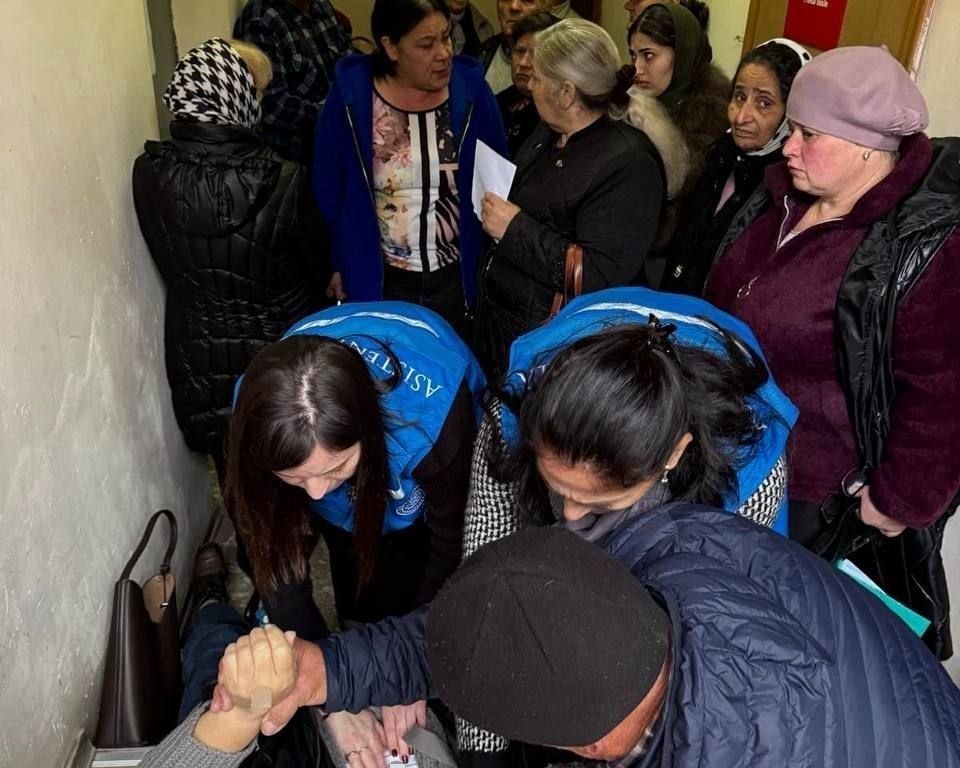
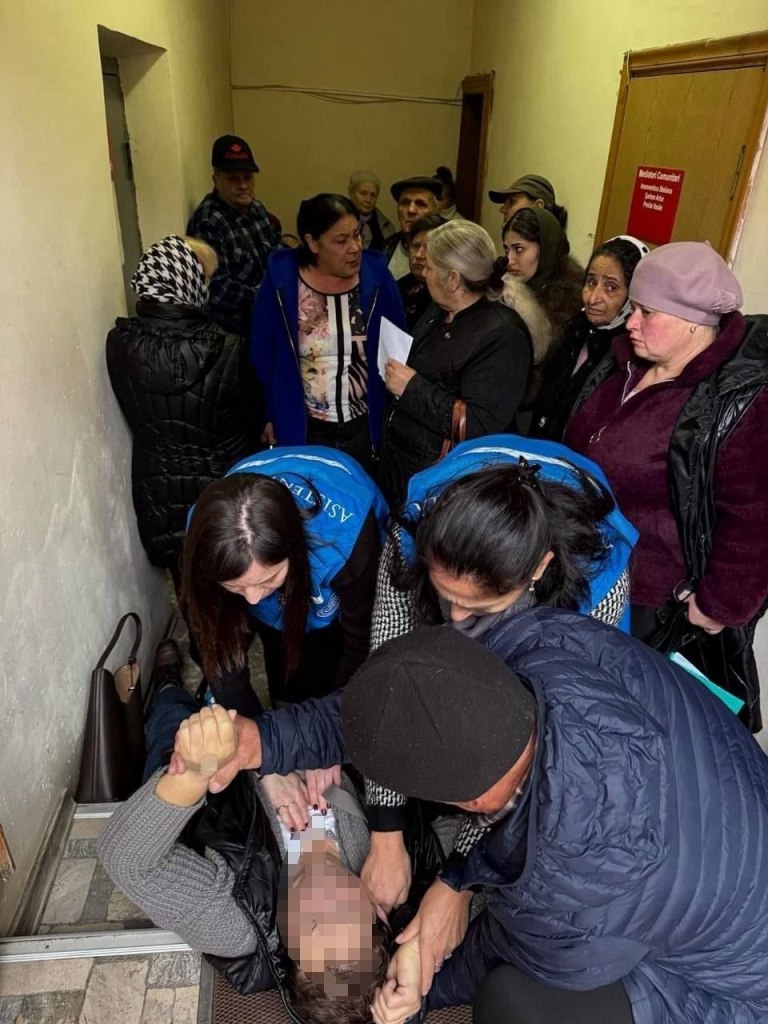
On November 3, 2026, an elderly woman collapsed (🇲🇩) while waiting in line at her local City Hall (Ro: primarie) in the town of Soroca in northern Moldova. She was transported to the hospital where she died a short while later for unspecified reasons, although news reports did say she had only recently been discharged from a hospital, so she obviously had some serious ongoing health issues.
The reason why she was at City Hall was to file the necessary paperwork in order to be eligible for a rebate on her energy bills, of which we shall discuss more anon.
2020
In September, 2020, just ahead of the presidential election that she would later win, Maia Sandu, then head of the opposition, held a large protest against the government, mostly due to rising prices. On of their key accusations (🇲🇩) was that Moldovans were paying too much for gas, saying (my translation):
Why are people in Moldova paying 5 lei for a cubic meter of (natural) gas, when people in Georgia and Ukraine are paying a lot less? The Republic of Moldova has become a country of small incomes and big prices. It’s not even news anymore that wealthier countries where people earn a lot more money have lower prices than we do. I’m referring here to the price of food, medicine, clothing, as well as utility bills. Is this acceptable? No, it is not acceptable. So why is it happening?
To be clear, the actual price at that time was 4.7 lei per cubic meter, not five, but five had a catchier ring to it.
Today, that price is over 26 lei, or a five-fold increase. And no, salaries and pensions have NOT increased at the same rate.
So… how did we get here?
2021
Shortly after coming to power, Maia Sandu and her allies in parliament signed a five-year contract with Gazprom, the Russian state-owned provider of natural gas.
Meanwhile, in a separate but related contract, Maia Sandu’s government made a deal with PMR (Pridnestrovie) to buy the bulk of their electricity from my side of the river. The Kurchugan facility in PMR runs on natural gas, and so thanks to Russia, was able to convert that gas into very affordable electricity, both for domestic use as well as for export (to Moldova).
As such, in 2021, Maia Sandu’s government had assured a stable and affordable supply of both electricity (from PMR) as well as natural gas (from Russia), and all was more or less well.
2025
At the stroke of midnight on January 1, 2025, the authorities in Ukraine ceased all transit of Russian gas across their territory, including to PMR and Moldova.
Although this was announced months in advance, no one in the Moldovan government had any sort of plan for what to do (and many idiotic journalists blamed Russia). With PMR’s energy plant no longer supplied with gas, it was unable to generate electricity for export, meaning that Moldova had to buy it on the open market at vastly higher prices, although Romania did initially supply some for free.
Simultaneously, Moldova also had to buy its natural gas on the open market, although it was able to draw on its reserves. Like many European countries, natural gas is purchased during the summer when it’s cheaper and then kept in storage (mostly in Ukraine) for use in winter.
Here in PMR, we went through hell for a month, but then a deal got eventually worked out where gas is purchased from a Hungarian company and then paid for by a mysterious firm in Dubai, and the understanding is that, somehow, the Russian government is providing the funds for the firm in Dubai.
Seriously, it’s a convoluted and weird deal, but the long-and-short of it is that PMR has enough gas to keep homes and schools warm plus generate electricity solely for domestic use, but not enough for export. Oh, and the price comes to around 2 Moldovan lei for a cubic meter 😀
2026
Luckily for everyone in this region, the weather in January 2026 was rather mild. February was brutally cold, but things really warmed up in March, so Moldova made it through relatively unscathed, although there have been a few times when their electrical grid has been right at the limit of collapsing.
Because Moldova is incapable of affording gas and electricity on the open market, the European Union stepped in with a compensation scheme (UK) or rebate program (USA) in which the poorest households and most financially vulnerable people received cash so that they could pay their electrical and gas bills.
The cost for this during the 2025/2026 season was just over 2 billion lei or around $112 million, a tiny portion of which was paid for by the Moldovan government, the rest coming from the EU.
Therefore, what would happen is individuals (not companies) would get a sky-high utility bill, have to pay it, but then receive a cash rebate afterward of up to 1,000 lei ($55), depending on their personal circumstances.
This worked, just barely, but the EU began cracking down on Moldova’s budgetary shortfalls and shenanigans over the summer, demanding greater accountability and fiscal responsibility. As such, they put off any concrete offers to repeat the same compensation scheme/rebate program for the 2026-2027 winter season.
Current Day
October was a warm month, with T-shirt temperatures through the first half, and it only got slightly chillier by the end of the month. Obviously, though, everyone knew colder weather was coming.
Despite this, the Moldovan government did nothing to prepare other than spend every day in a frenzy as they tried to come up with the necessary money for the energy compensation/rebate program, even saying at one point that they might have to take money from other government agencies/departments in order to fund it.
As of this very moment, they still have not even published(!) the criteria of who is eligible to get compensation on their energy bills or exactly how much each household can get, just lots of “maybe this” and “maybe that” statements.
The reason for all the panic is that they only have 700 million lei allocated (roughly $38 million) but know they’ll need at least 2.5 billion ($139 million) if they want to match last winter’s costs.
In other words, there’s a $100 million shortfall, and the EU has so far been really cagey about how much it’s willing to help, although they did just announce 30 million euros of “support” for the program (meaning it might be a loan rather than a grant), meaning the government of Moldova somehow needs to somehow find or borrow around $70 million from somewhere or else face a tremendous political backlash.
And Now, Back to the Old Woman Who Died in Soroca
Although no one knows what the eligibility criteria are for this winter’s compensation program, registration opened at 6:00 AM on November 3, 2026.
Some people, of course, registered online. But many Moldovans, including the elderly, had to go down to their local City Hall office in order to file the paperwork. As such, there were enormous lines, and as we now know, one woman tragically died while waiting in one.
The minimum monthly old-age pension in Moldova is 3,264 lei ($181), meaning that it is literally impossible for them to pay their heating costs without assistance. My own mother-in-law was in line at her City Hall on November 3, and she told us that a lot of people were afraid to even turn on their heating before getting approved for the compensation program because they couldn’t risk not having enough money for food and other essentials like medicine.
Sadly, the weather did turn quite cold beginning on November 1, almost like a switch was thrown, and it truly breaks my heart to know that there are people out there right now who have functional heating systems in their homes but can’t turn them on because they simply can’t afford to, at least not without a guarantee that they’ll get a cash rebate.
Independent Slavery
And all this because of what? Because the Moldovan government wants to brag about its energy “independence” from Russia when the stark truth is that Moldova is literally unable to afford buying energy elsewhere without help – and that help may not even be coming.
As of this exact moment, there’s at $70 million plus shortfall for the compensation program, and that means as many as 1 million people in Moldova are at risk of being unable to heat their homes this winter. All because of stupid geopolitics and insufferable pride.
One doesn’t have to “like” or approve of the Russian government to understand that Europe’s poorest country is literally unable to afford to keep its citizens warm at open-market prices. And keep in mind that Moldova’s energy regulatory agency has just warned that prices may increase an additional 30% from where they already are!
At what point do you just bite the bullet and say that it’s better not to have granny freeze to death even if it means paying the “enemy” to keep her warm?
So far, “only” one woman has died because she couldn’t afford to stay warm in her own home due to this cockamamie compensation scheme, but I have a feeling she won’t be the last. Meanwhile, we’re all toasty warm and snug over here on this side of the river (in PMR), so perhaps we’ll be the one opening refugee shelters by the time this winter is over.

